The Nutrition Mistake That Ruins Your Triathlon Bike Leg (And the Run After It)
Quick Answer: Most triathletes who fall apart on the run fueled correctly for the bike leg alone but under-fueled for the combined demand of bike-plus-run. Aim for 60-90g of carbs per hour on the bike specifically (not less), started in the first 20 minutes — waiting until you ‘feel’ low is already too late for the run to come.
The bike leg felt strong the whole way. Then T2 happened, and your legs had nothing left — heavy, sluggish, nothing like the training runs where you felt fine. That crash almost always traces back to a bike-leg fueling decision, not a run-specific problem.

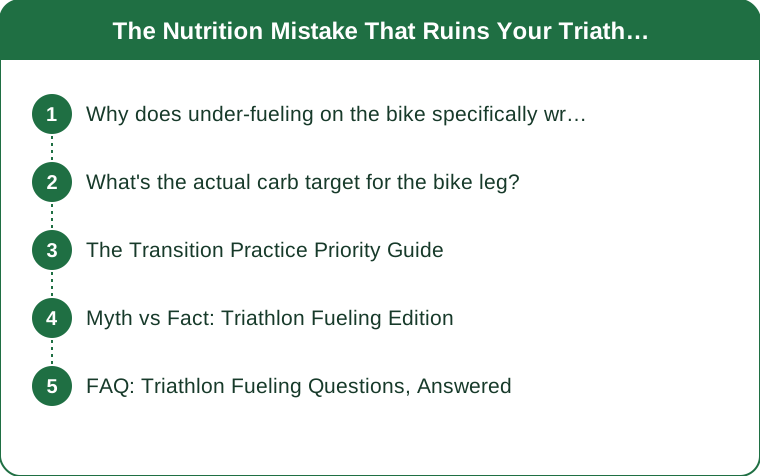
Why does under-fueling on the bike specifically wreck the run?
Glycogen depletion is cumulative across the whole race, but the bike leg is where most athletes have the opportunity to fuel easily — aid stations, accessible nutrition, stable position — and where many under-fuel anyway because they feel fine in the moment.
By the time low glycogen symptoms show up, you’re often already on the run, where fueling is harder and the deficit is much tougher to recover from mid-leg.
What’s the actual carb target for the bike leg?
60-90g of carbohydrate per hour, started within the first 15-20 minutes of the bike — not when you first feel hungry or low, which is already a lagging signal.
This usually means 2-3 gels or an equivalent sports drink/chew combination per hour, practiced in training at race pace so your gut is used to processing that volume under effort.

The Transition Practice Priority Guide
A commonly under-practiced skill: eating in T1/T2 and in the first few minutes of the next leg, not just during steady-state bike or run segments. Practice taking in nutrition during the awkward transition moments specifically — bike mount, run start — since that’s often when athletes skip a planned feeding because it’s inconvenient.
Myth vs Fact: Triathlon Fueling Edition
Myth: If you feel fine on the bike, you’re fueling enough. Fact: Feeling fine on the bike and having enough glycogen reserve for the run afterward are two different things — the bike leg is more forgiving of under-fueling in the moment than the run leg that follows it.
Myth: Water is enough for anything under 90 minutes. Fact: Even shorter-course triathletes benefit from some carb intake on the bike if the run leg is the priority — total race duration, not just bike duration, is what matters for the fueling decision.
Myth: More fuel is always better. Fact: Above roughly 90g/hour, most athletes’ guts can’t absorb it efficiently without training that specific tolerance — more isn’t better past your personal absorption ceiling.
FAQ: Triathlon Fueling Questions, Answered
How do I know my personal carb tolerance?
Test fueling amounts in training bike-to-run brick sessions, not just standalone rides — race-day gut tolerance under combined-discipline stress is different from single-sport training.
Should fueling strategy change for sprint vs. Olympic vs. 70.3 distance?
Yes — shorter races (sprint) rely more on pre-race fueling and less on mid-race intake, while 70.3+ distances need the full 60-90g/hour bike strategy to protect the run.
What if I feel nauseous taking in that much on the bike?
Start lower (30-40g/hour) and build tolerance over several weeks of training rides — the gut can be trained to absorb more, but it takes gradual practice, not a single race-day attempt.
TL;DR:
- Bike-leg under-fueling is the hidden cause of most run-leg crashes, not pacing
- Target 60-90g carbs/hour on the bike, starting in the first 15-20 minutes
- Practice fueling during transitions specifically — that’s where planned intake gets skipped
- Total race duration (not just bike duration) should drive your fueling strategy
Fuel the bike leg like the run depends on it — because it does.
Keep Reading
This article is for general informational and styling purposes only. Fit, sizing, and product availability may vary.