How to Actually Get Comfortable Swimming in Cold Open Water Before Race Day
Quick Answer: Cold water shock — the involuntary gasp reflex and chest tightness on initial cold immersion — is a distinct physiological response that pool swimming doesn’t prepare you for, and it fades with repeated, gradual cold exposure rather than fitness. A handful of shorter, progressively colder open water sessions before race day builds real acclimatization that a single race-morning swim can’t replicate.
You can swim a strong pool mile without issue and still gasp involuntarily the second cold open water hits your chest on race morning. That reaction is physiological, not a fitness gap — and it responds to a specific kind of preparation.
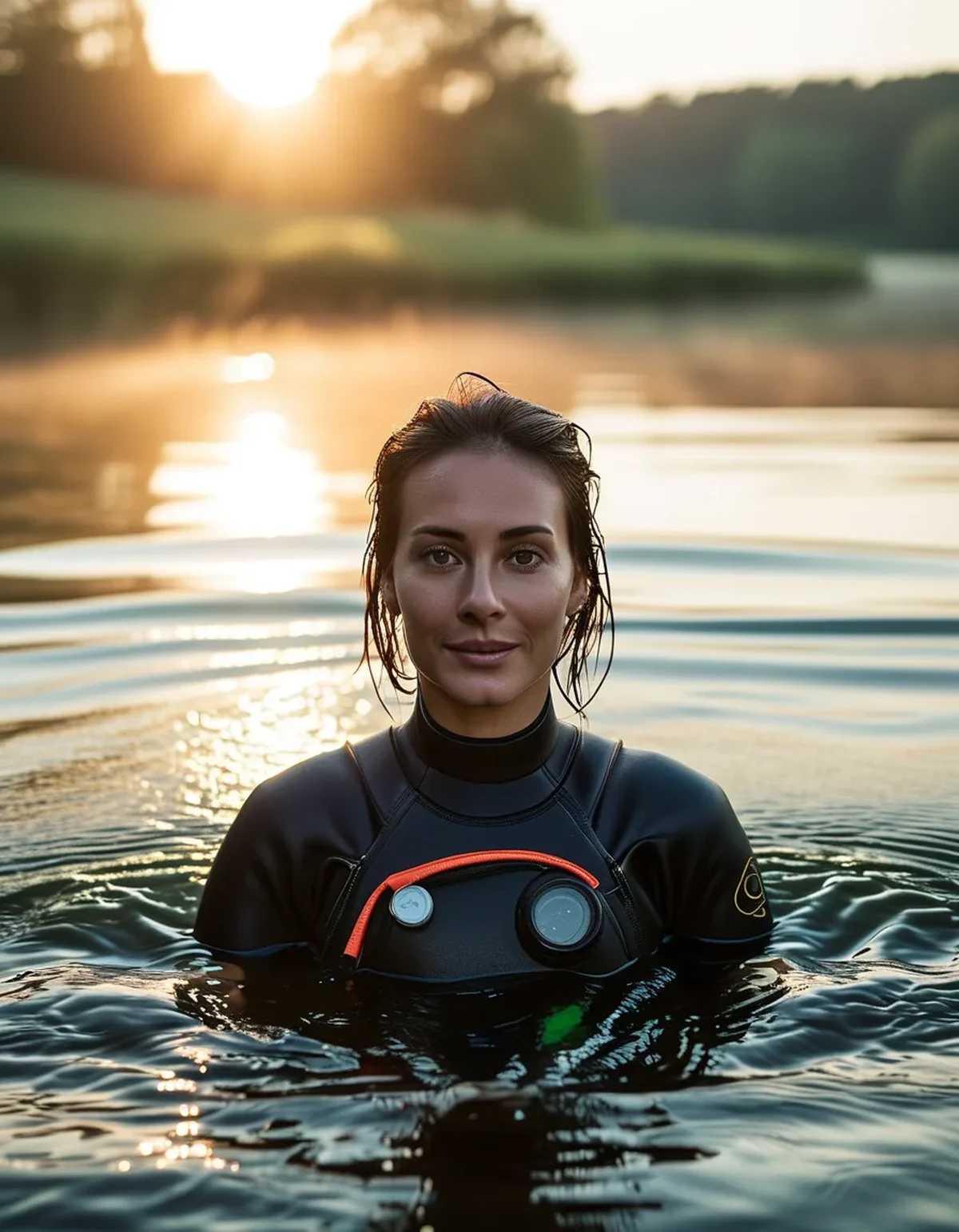
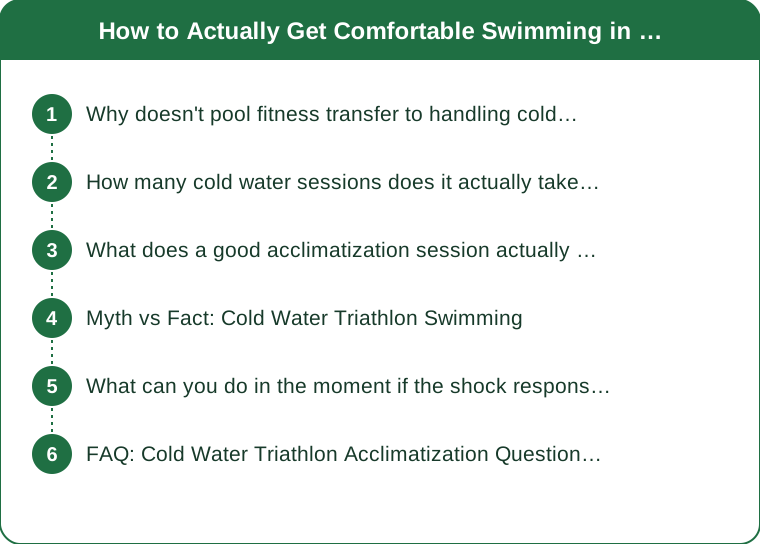
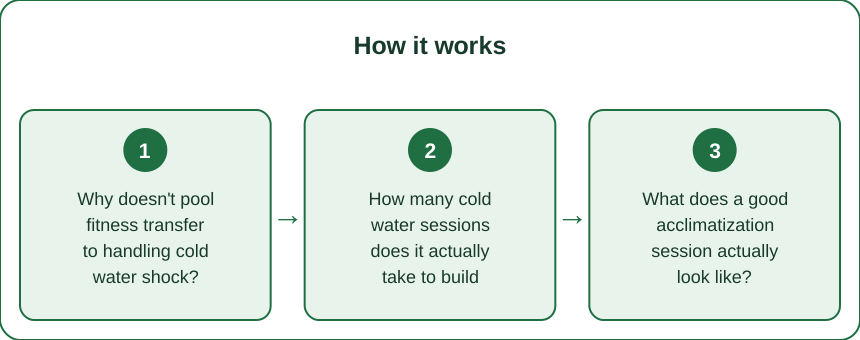
Why doesn’t pool fitness transfer to handling cold water shock?
Because cold water shock is a reflex response to sudden temperature change, not a cardiovascular fitness issue — even elite pool swimmers experience the same involuntary gasp and chest tightness on first cold immersion if they haven’t specifically acclimated to cold water. Pool training builds the swimming fitness you’ll need, but it does nothing to prepare the body’s cold-water reflex response, which is a separate system entirely.
This is why race-morning panic in open water sometimes happens to strong swimmers just as often as beginners — it’s not a stroke or endurance problem in that moment, it’s an unacclimated nervous system response.
How many cold water sessions does it actually take to build tolerance?
There’s no universal number, but most triathletes notice a meaningful reduction in the shock response after 3-5 progressively colder open water sessions, spaced over several weeks before race day. The acclimatization tends to build gradually rather than happening all at once — each session slightly reduces the intensity of the reflex response compared to the last.
A single cold water session close to race day is better than none, but it’s a much weaker version of the adaptation compared to a handful of sessions spread out with time between them for the body to actually adjust.
What does a good acclimatization session actually look like?
Start with a short, controlled entry — wade in gradually rather than diving straight in, and let your breathing settle for 30-60 seconds before starting to swim. Keep the first session brief (5-10 minutes is enough to trigger real adaptation without needing to push through significant discomfort the whole time.
Gradually increasing both duration and how cold the water is across sessions, rather than jumping straight to race-condition cold water and full distance at once, builds the adaptation more reliably and with less risk of a genuinely bad, discouraging first experience.
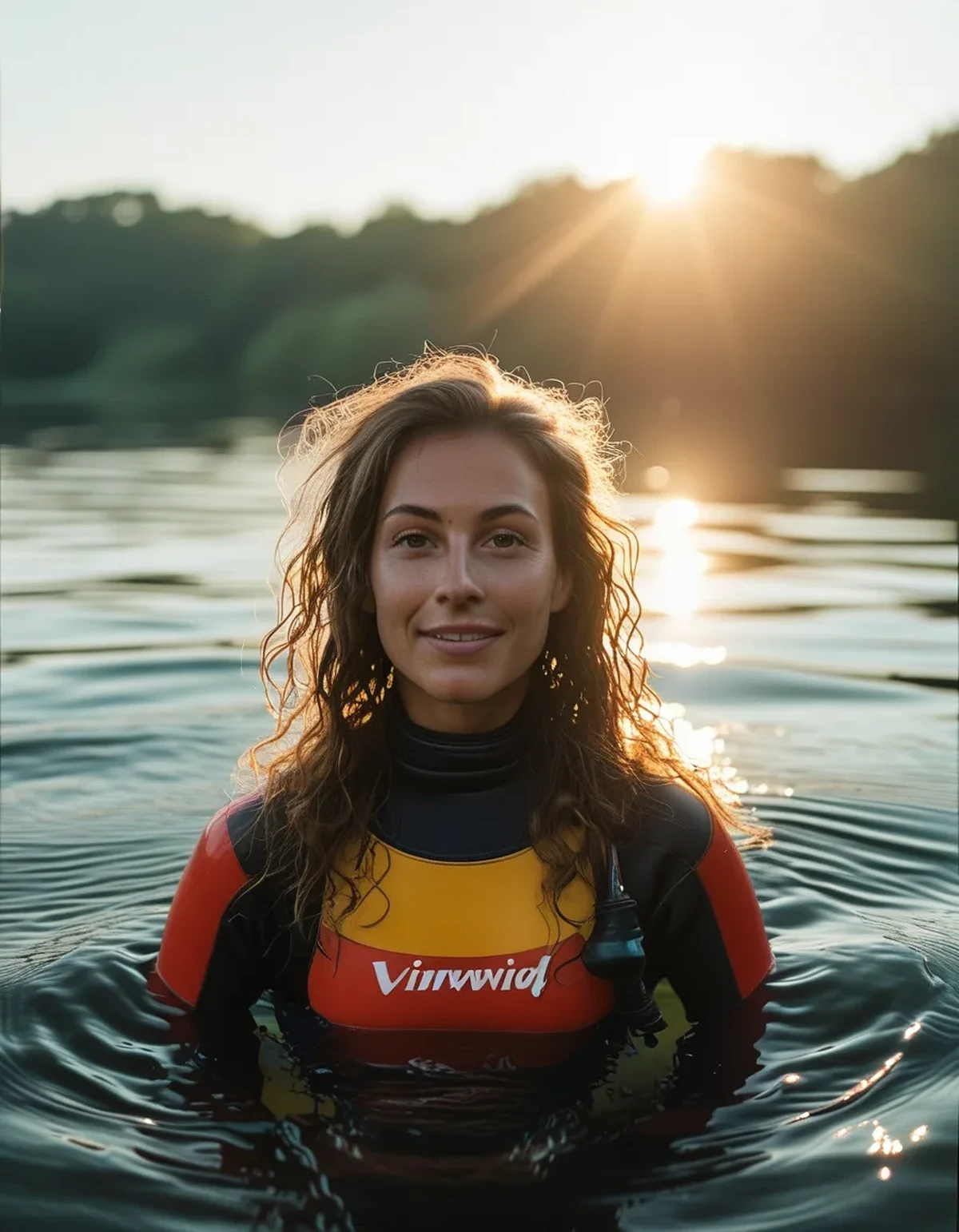
Myth vs Fact: Cold Water Triathlon Swimming
Myth: A good wetsuit eliminates cold water shock entirely. Fact: A wetsuit helps significantly with sustained cold exposure, but the initial face and chest shock on entry still triggers the reflex response somewhat regardless of wetsuit thickness — acclimatization training still matters.
Myth: If you’re fit enough, cold water shock won’t affect you. Fact: The reflex is physiological, not fitness-dependent — strong swimmers without cold water experience are just as susceptible as beginners on their first cold immersion.
Myth: You should avoid putting your face in cold water until race day to avoid unpleasant training experiences. Fact: Face immersion specifically triggers a strong version of the reflex, which makes it one of the more important things to practice in advance rather than avoid — race day is the worst time to experience it for the first time.
What can you do in the moment if the shock response hits on race morning anyway?
Deliberately slow and control your breathing — exhaling longer than you inhale helps override the reflex’s tendency toward short, panicked breaths. Treading water or floating on your back briefly near the start, rather than immediately swimming hard, gives your body a few seconds to settle before demanding full effort.
Starting at the back or side of the swim pack, away from the most chaotic, contact-heavy water, also reduces the compounding stress that can make an already-triggered shock response feel worse.
FAQ: Cold Water Triathlon Acclimatization Questions, Answered
How cold does water need to be to trigger this reflex?
It varies by individual, but water noticeably colder than a heated pool — roughly the low-to-mid 60s°F and below — is where most people start to notice a real shock response.
Is it normal to still feel some shock even after acclimatization training?
Yes, a mild version often persists even with training — the goal of acclimatization is reducing the intensity and duration of the reflex, not eliminating it completely.
Should I acclimatize in the actual race venue water if possible?
If accessible before race day, yes — practicing in the specific water temperature and conditions you’ll race in gives the most directly useful acclimatization.
TL;DR:
- Cold water shock is a reflex response, separate from swimming fitness, that pool training doesn’t prepare you for
- 3-5 progressively colder open water sessions before race day build meaningful acclimatization
- Gradual entry and short initial sessions build tolerance more reliably than jumping straight into full cold-water distance
- A wetsuit helps with sustained cold but doesn’t eliminate the initial entry shock response
- Controlled exhale-focused breathing helps override the reflex if it hits on race morning anyway
The gasp and chest tightness aren’t a sign you’re not ready to race — they’re a specific, trainable response that a few deliberate cold water sessions handle well before the starting horn.
Keep Reading
This article is for general informational and styling purposes only. Fit, sizing, and product availability may vary.