Triathlon Gear on a Budget: What You Actually Need for Race One (and What Can Wait)
Triathlon’s gear reputation scares off more beginners than its distances — the carbon bikes and aero helmets of race photos — while the sprint finisher’s actual requirements fit a modest budget: the bike that works, the suit that layers, the list that’s shorter than feared. The budget tri-gear guide.

The Minimum-Viable Kit
What race one requires: the bike truth (ANY working bike finishing sprints — the hybrid-and-borrowed bikes at every race; the tune-up from the maintenance doctrine being the real investment: the working brakes-and-gears check; the carbon dreams deferred per the earn-it doctrine), the swim kit (the goggles from the goggle doctrine and a swimsuit — the wetsuit question answered by water temperature and RENTAL options; the cap usually race-provided), the run kit (the existing run shoes from the shoe doctrine — the elastic laces being the one cheap tri-specific upgrade: the T2 seconds for five dollars), the race outfit solution (the tri-suit being convenient, not required — the sports-bra-and-shorts swim, the shirt added at T1 alternative; the layering plan from the transition doctrine), the helmet law (the certified helmet being MANDATORY — the existing one passing; the only non-negotiable purchase if lacking per the safety doctrine), the race-belt cheapie (the number belt at ten dollars saving safety pins and time), and the total math (the existing-bike owner racing for under 50 dollars of new gear — the barrier, audited honestly per the budget doctrine).

The Borrow-and-Used Strategy
Stretching the budget: the borrow network (the bike borrowed for race one — the friend’s hybrid with a tune-up; the tri-community’s famous generosity per the community doctrine), the used market (the entry road bikes from the used doctrine — the fit-first buying per the bike-fit doctrine; the end-of-season and upgrade-castoff economics), the rental tiers (the wetsuit rentals for cold-water races — the race-weekend rental packages some events offer), the club resources (the tri-club memberships unlocking loaner gear and pool time — the coached sessions from the community doctrine; the club fee out-earning gear spend per the priority doctrine), and the skip-list confidence (the aero helmet, the power meter, the race wheels and the tri-bike being years-later conversations — the speed living in training, not carbon per the training doctrine; the beginner passing gear-heavy racers on a borrowed hybrid being every race’s best story).
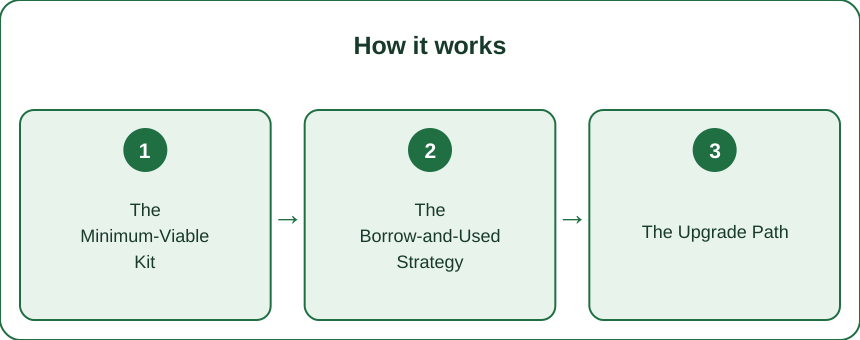
The Upgrade Path
Spending as commitment grows: the after-race-one tier (the tri-suit as the first real purchase IF continuing — the transition simplicity earned; the clip-in pedals-and-shoes from the spin doctrine as the second: the real speed-per-dollar upgrade), the season-two purchases (the own road bike if borrowed — the fit-first buying; the wetsuit if racing cold water regularly: the rental-math crossover point per the cost doctrine), the training-investment priority (the coaching, pool access and race entries out-earning equipment — the engine before the machine per the priority doctrine), the never-required honesty (the completed-and-happy triathlete on modest gear being common — the gear ceiling being a choice, not a requirement per the sufficiency doctrine), the maintenance habit (the owned gear kept alive per the care doctrines — the bike-and-wetsuit care; the cost-per-race falling yearly), and the closing frame (the triathlon entered on a tuned borrowed bike and twenty dollars of accessories — the finish line indifferent to carbon; the sport, cheaper than its photos; the gear, earned by the seasons that follow). Tune the bike you have, buy the helmet if you must, elastic laces for five dollars: race one, under budget.
Race one needs less than the photos suggest: any tuned working bike (borrowed counts), goggles, your run shoes with $5 elastic laces, a certified helmet (the one true non-negotiable) and a $10 race belt. Skip the aero everything — speed lives in training. Upgrade after commitment: tri-suit first, clip-ins second, own bike by season two.
Keep Reading
This article is for general informational and styling purposes only. Fit, sizing, and product availability may vary.