Why Your Goggles Fog Up Specifically During Open Water Swims, Not the Pool
Quick Answer: Fogging happens when warm, humid air inside the goggle condenses on a cooler lens surface, and open water swims typically involve a bigger temperature gap between your body heat and the surrounding water and air than a climate-controlled indoor pool does, which is why the same goggles that work fine indoors fog up specifically outdoors.
You’ve used the same pair for months of pool training without issue. First open water race, and they’re fogged within minutes, which feels like equipment failure but is actually a predictable temperature effect.
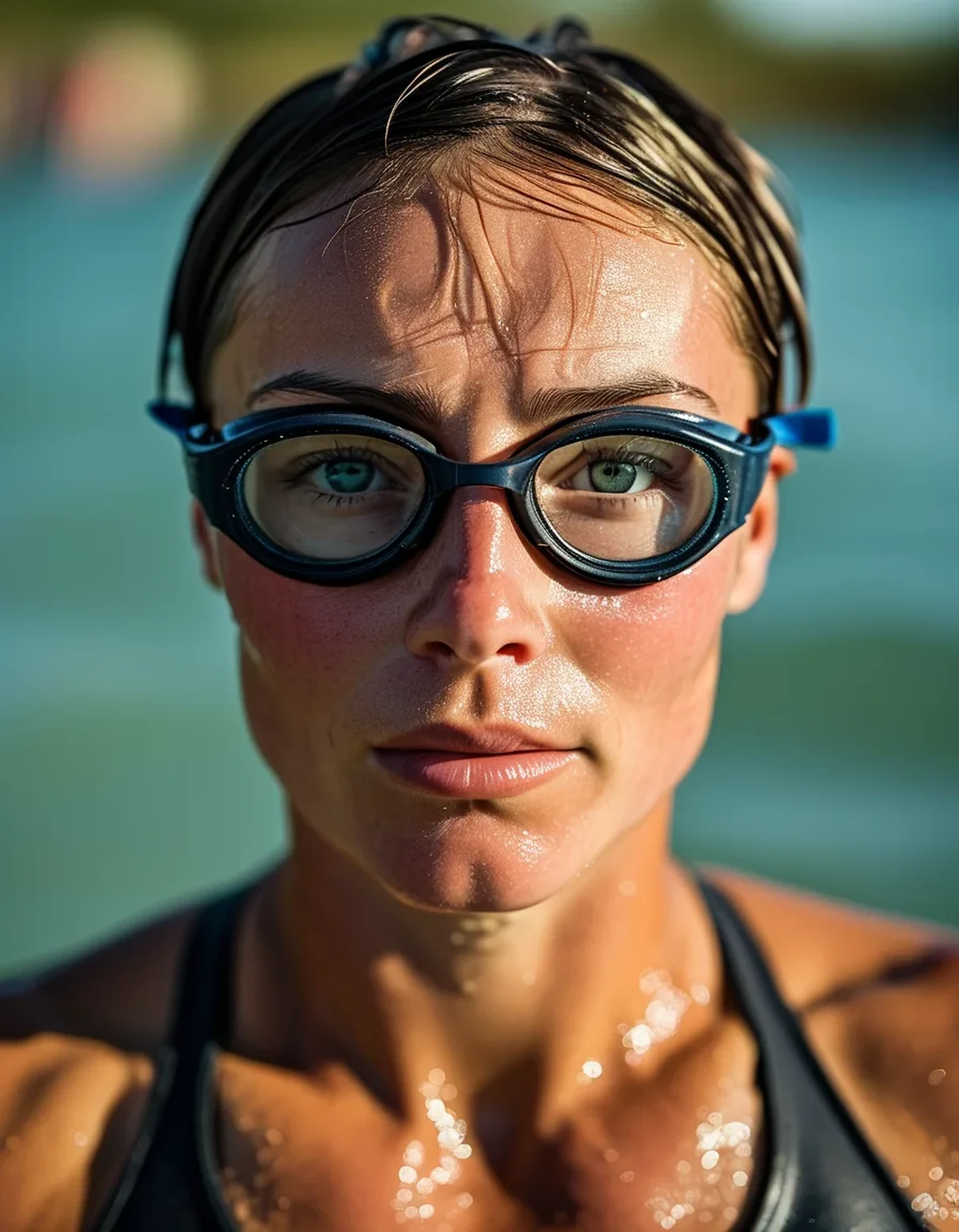
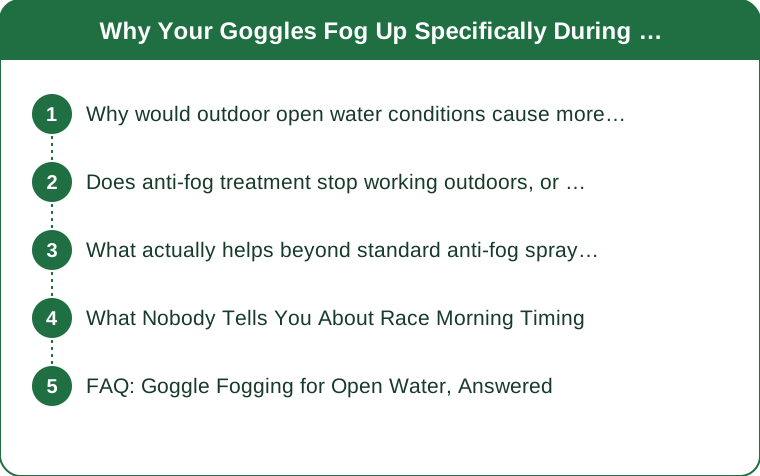
Why would outdoor open water conditions cause more fogging than an indoor pool?
Indoor pools are climate-controlled, keeping air and water temperature relatively close to body temperature and to each other, which minimizes the temperature differential that drives condensation. Open water swims often involve cooler water and variable outdoor air temperature, creating a larger gap between the warm, humid air trapped inside the goggle and the cooler outer lens surface, which is the core physical mechanism behind condensation forming faster and more persistently.
Does anti-fog treatment stop working outdoors, or is something else going on?
Anti-fog coatings work by reducing surface tension so condensation spreads into a thin, clear film rather than forming visible droplets, but they have a limited capacity relative to how much condensation is actually forming. In a bigger temperature gap, more condensation forms than the same coating can effectively manage, which is why a treatment that works fine in milder pool conditions can be overwhelmed in colder open water.
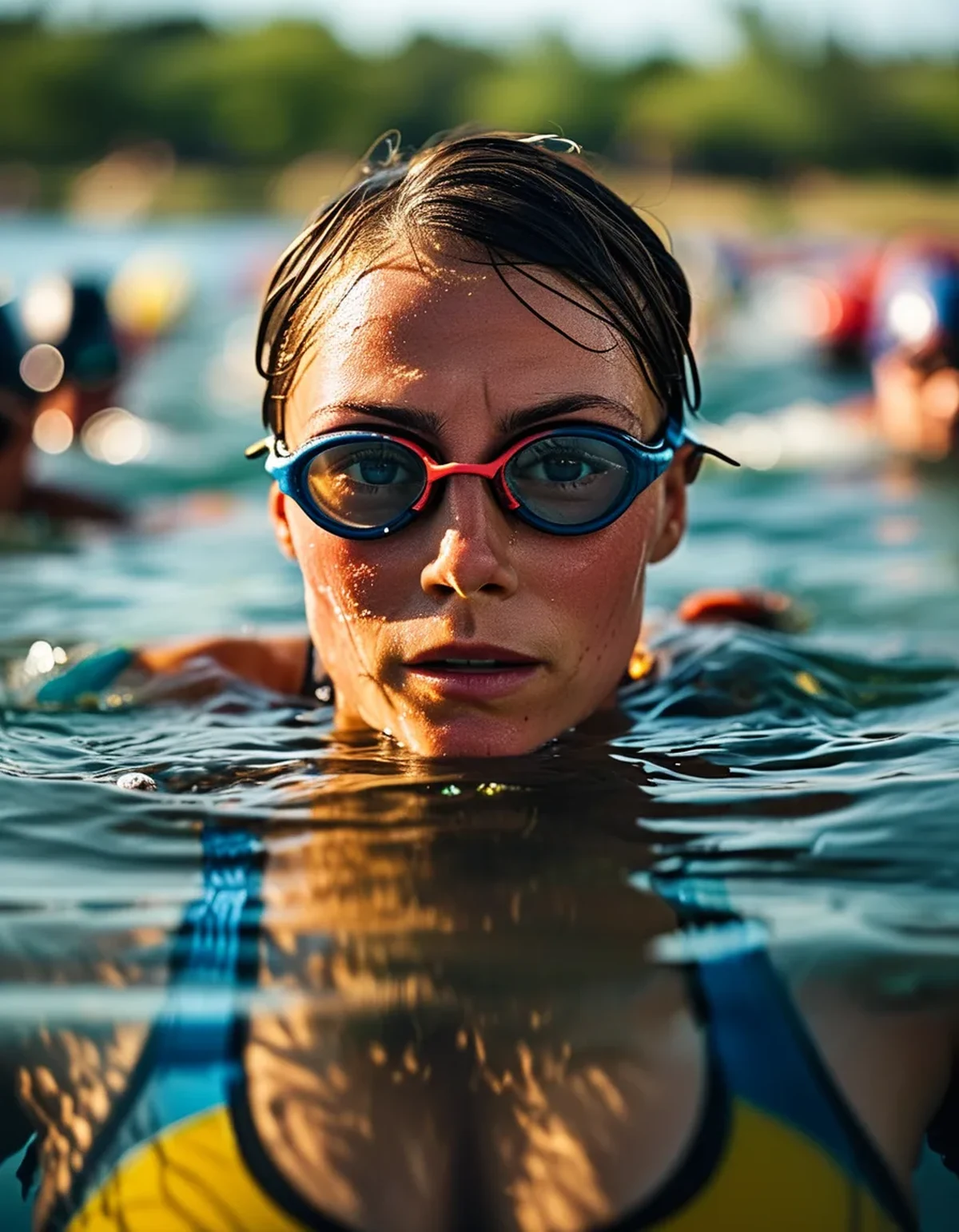
What actually helps beyond standard anti-fog spray for open water specifically?
Rinsing goggles in the actual open water temperature right before the swim, rather than putting on room-temperature goggles, reduces the initial temperature shock and condensation spike. Some triathletes also apply a slightly heavier anti-fog treatment specifically for open water races, recognizing that outdoor conditions demand more from the coating than routine pool sessions do.
What Nobody Tells You About Race Morning Timing
Here’s a detail many triathletes learn the hard way: putting goggles on too early before the swim start, while standing around at normal air temperature, lets warm humid air build up inside them before you’ve even entered the water, putting goggles on right before entering, rather than minutes earlier, meaningfully reduces the fog buildup that’s already started by the time the gun goes off.
FAQ: Goggle Fogging for Open Water, Answered
Does water temperature itself, not just air temperature, affect fogging?
Yes, colder water increases the temperature gap against your body heat, which is part of why cold open water races see more fogging complaints than warmer ones.
Is spitting in goggles as an anti-fog trick actually effective for open water?
It provides a mild, temporary effect similar to a weak anti-fog coating, but it’s generally less reliable than a proper anti-fog product for the bigger temperature gap open water presents.
Should I buy goggles specifically marketed for open water swimming?
Some are designed with tinted lenses and slightly different seals for outdoor glare and fit, but anti-fog performance depends more on treatment and temperature management than the specific open-water marketing label.
TL;DR:
- Fogging is driven by the temperature gap between warm trapped air and a cooler lens, which is typically bigger outdoors
- Anti-fog coatings have limited capacity and can be overwhelmed by a bigger temperature differential
- Rinsing goggles in the actual open water temperature right before swimming reduces the initial condensation spike
- Putting goggles on right before entering the water, not minutes earlier, prevents fog from building up beforehand
At your next open water race, hold off putting your goggles on until right before you enter the water, and rinse them in the actual water temperature first, that timing change alone often solves fogging that anti-fog spray couldn’t fully fix.
Keep Reading
This article is for general informational and styling purposes only. Fit, sizing, and product availability may vary.