Why Sighting Costs You More Time Than Swimming Slowly Does
Quick Answer: Sighting badly costs more time than swimming slightly slower, because each head lift drops the hips and increases drag, and because poor navigation adds real distance. The efficient technique is an alligator-eye lift — eyes just above the surface, mouth still down — taken on the front of the stroke and immediately rolled into a normal breath to the side. Sight every 6 to 10 strokes in choppy conditions and less often in calm water with a clear line, and practice it in the pool until it’s automatic.
You swam a strong pool season. In the race you came out of the water two minutes down on people you beat in the pool, and your watch says you swam 1,650 meters in a 1,500-meter race.
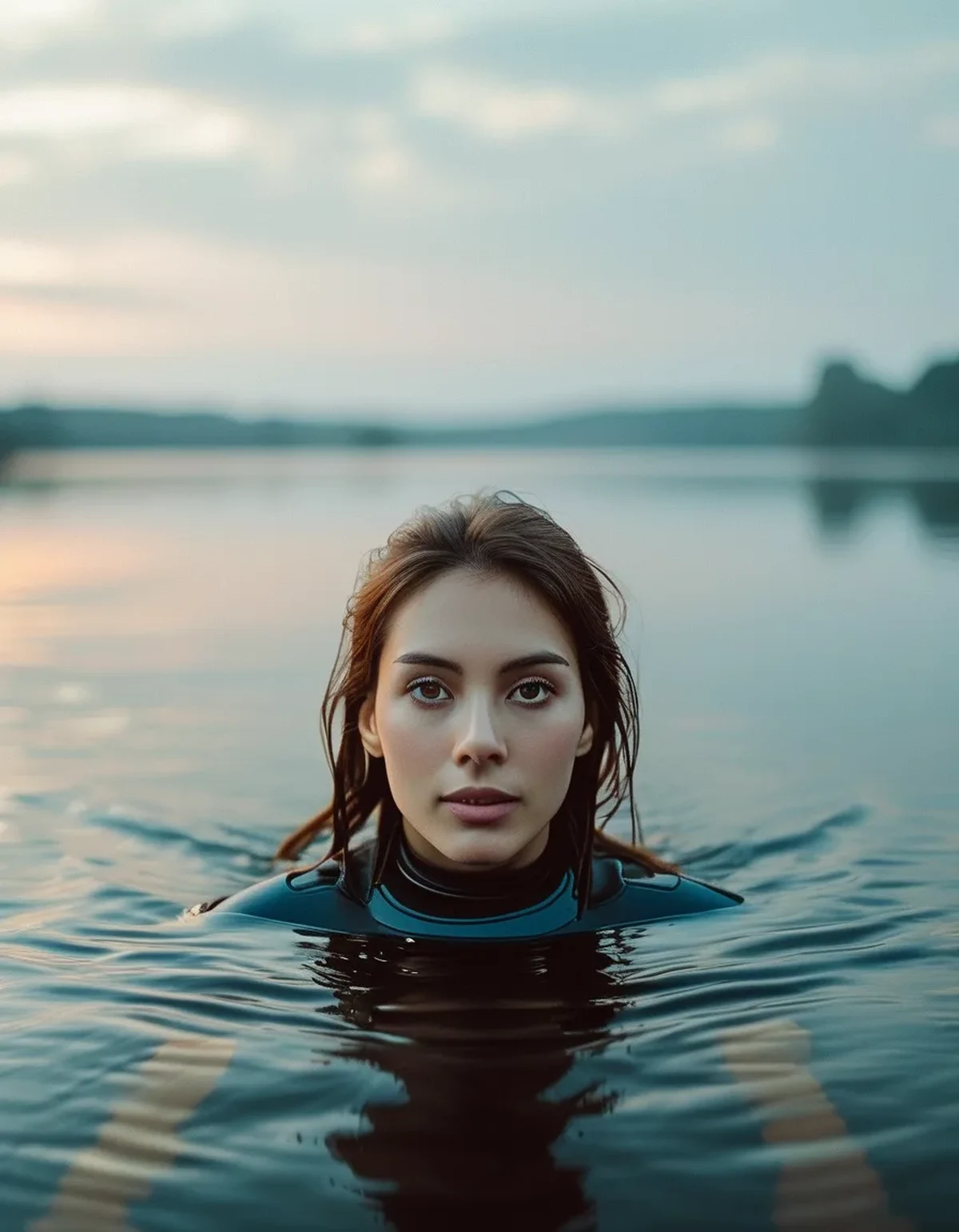
Why does sighting cost so much?
Two separate costs, and most swimmers only think about one.
Cost one: the drag penalty. Lifting your head raises the front of your body, which drops your hips and legs. Body position is the single largest determinant of drag in swimming, and a dropped hip position increases frontal area substantially. Every badly executed sight is a brief moment of swimming with the drag profile of a beginner.
A single lift costs little. Thirty lifts across a 1,500-meter swim, each one dropping the hips for two or three strokes afterward, is a meaningful fraction of the swim spent in a bad position.
Cost two: the distance penalty. This is the one that shows up on the watch. Swimming even slightly off-line adds distance geometrically — a course that drifts and gets corrected repeatedly can easily add 5 to 10 percent to the total. On a 1,500-meter swim, that’s 75 to 150 extra meters, which for most age-group swimmers is 1.5 to 3 minutes.
The trap: swimmers who sight rarely to protect their body position often swim the most extra distance. Swimmers who sight constantly stay on line but swim in a poor position the whole way. Neither extreme is the answer — the technique is.
And the third, unquantified cost: repeatedly lifting the head fatigues the neck and lower back, which is why many triathletes report back tightness on the bike that they attribute to the bike position.
What does correct sighting technique look like?
One movement, integrated with the breath, not a separate action.
The alligator eyes technique:
- On the front part of your stroke, as your leading hand begins to catch, press down slightly with that hand
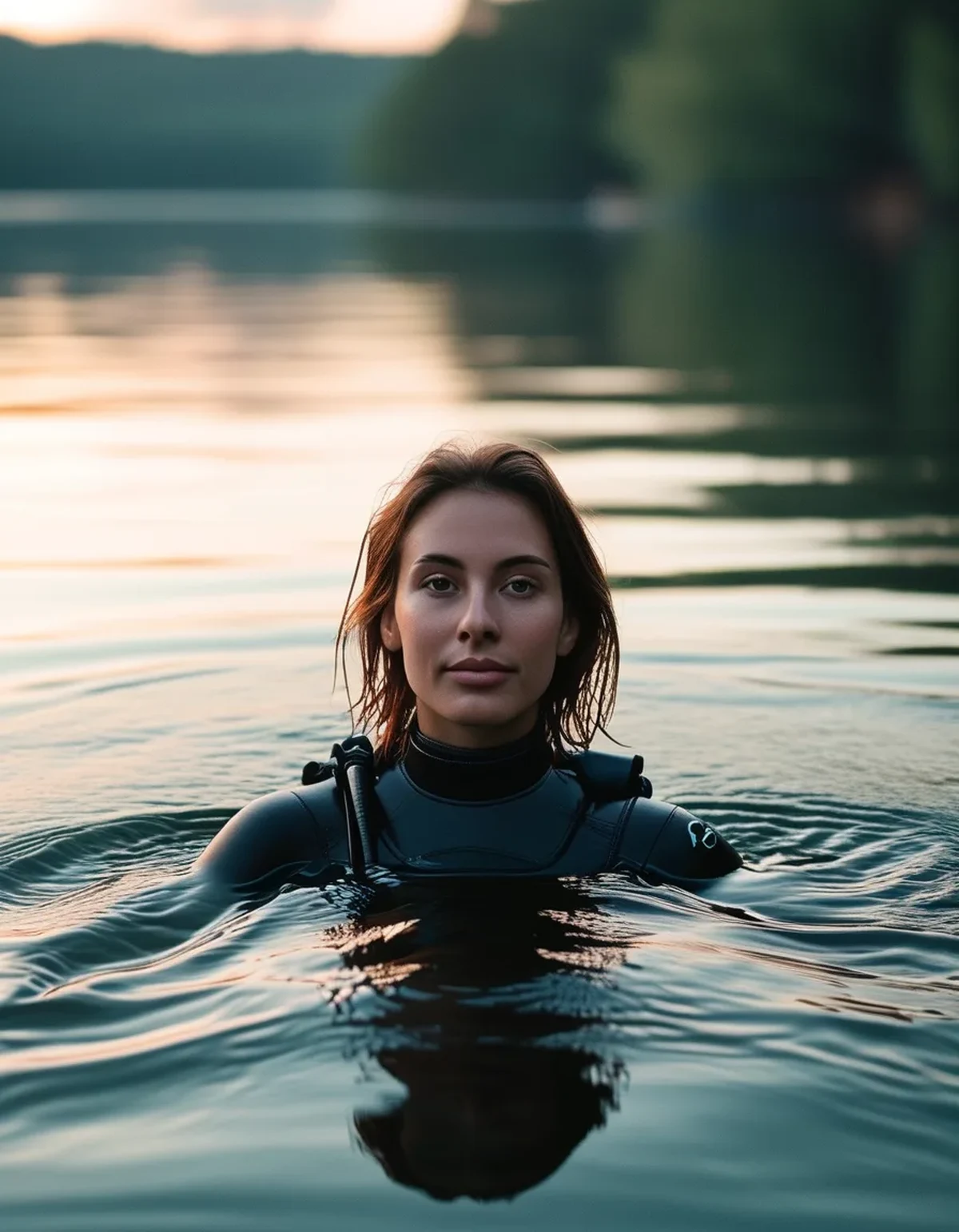
- Lift the head just enough that your eyes clear the surface — goggles above water, mouth still in it. Like an alligator.
- Take the visual snapshot. One glance. Don’t hold the position looking for detail.
- Drop the face immediately and rotate into a normal side breath on that same stroke
- Continue swimming
The key detail most people miss: the sight and the breath are one combined movement, not two. Sighting forward and then taking a separate breath afterward doubles the disruption. Sight, then roll straight into the breath.
Common errors:
- Lifting the whole head and shoulders, which is the biggest hip-drop cause. The lift should be minimal.
- Sighting on the breathing side rotation, which twists the neck awkwardly and gives a poor view
- Holding the head up looking for the buoy. If you don’t see it in one glance, take another sight two strokes later rather than staying up.
- Kicking harder to compensate, which burns energy you need for the bike
- Stopping to sight, breaststroke-style. Common among nervous swimmers and enormously slow.
Wetsuit note: a wetsuit provides buoyancy that partially offsets the hip drop, so sighting is more forgiving in a wetsuit swim than in a non-wetsuit one. Don’t let that build a habit that falls apart in a warm-water race.
5 Mistakes That Add Distance in Open Water
1. Sighting only the next buoy. Buoys are low, often small, and disappear in chop. Use a large fixed landmark behind the buoy — a building, a tree line, a hill — and sight that instead. It’s visible from further away and doesn’t move.
2. Not knowing which way you drift. Almost everyone has an asymmetric stroke and pulls consistently to one side. Find out which way in training — swim 100 meters in open water with your eyes closed and see where you end up. If you drift left, sight slightly right of the target and let the drift correct you.
3. Following the swimmer ahead. Feet are easy to follow and that swimmer may be badly off course. Drafting is legal and valuable, but verify the line yourself every 20 to 30 strokes. Following a poor navigator for 400 meters is a very expensive mistake.
4. Not doing the pre-race reconnaissance. Five minutes before the start, standing on the beach: identify the buoys, identify a large landmark behind each one, note the sun position, and note the current or chop direction. This is the highest-value five minutes of the entire race and most athletes spend it in the toilet line.
5. Sighting at a fixed count regardless of conditions. Calm water with a clear line needs sighting every 10 or more strokes. Chop, sun glare, or a crowded pack needs every 6. Adapt to the conditions rather than running a metronome.
The one nobody mentions: sun position. Swimming directly into a low morning sun makes buoys effectively invisible. Tinted or mirrored goggles for a sunrise start are not a luxury, and knowing the sun will be in your eyes on the return leg tells you to rely on a landmark to the side instead.
How do you practice this before race day?
Most of it can be built in the pool, which is where the technique should become automatic.
Pool drills:
- Sighting every 6 strokes for an entire set. Pick a fixed point at the end of the pool. 8 x 50m with sighting throughout. The goal is making it automatic, not making it comfortable.
- Head-up freestyle (water polo drill): 4 x 25m with the head fully up. This builds the neck and upper back strength that makes brief sights feel easy by comparison.
- Closed-eye swimming: swim a 25m length with eyes closed in an empty lane and see how far you drift. This reveals your asymmetry.
- Alternate breathing sides. Bilateral breathing evens out stroke asymmetry, which reduces drift at the source.
Open water sessions — non-negotiable before a race:
- At least 3 to 4 open water swims before your first race. Pool skills transfer imperfectly; the absence of a black line is a bigger adjustment than most people expect.
- Practice sighting on landmarks rather than buoys
- Practice swimming in a group if you can — contact, churned water, and following feet all change the experience
- Practice in your race wetsuit, which changes body position, shoulder mobility, and breathing
Race-week practice:
- Swim the course, or part of it, if permitted
- Note the landmarks in the actual conditions and light you’ll race in
Safety, which is not optional: never swim open water alone. Use a brightly colored swim buoy, swim with a partner or in a supervised session, know the water temperature and your tolerance for it, and be honest about conditions. Cold water shock is a genuine risk and it affects experienced swimmers.
This is general information, not medical advice.
What changes in a crowded race start?
Navigation gets harder exactly when body contact makes technique hardest.
Positioning at the start: if you’re not confident, start at the side and slightly back. You’ll swim a marginally longer line and avoid the worst of the washing machine, which is a good trade for most age-groupers. The time lost is far less than the time lost to panic.
In the pack: sight more often, not less. You can’t see landmarks past bodies, and everyone around you is subject to the same drift. Every 6 strokes is reasonable through the first few hundred meters.
Contact management: expect it, don’t fight it. A hand on your foot or a brush on the arm is normal. The instinct to stop and reorient is what turns contact into panic. Keep stroking; the pack spreads within a few hundred meters.
If you do get anxious: roll onto your back, take three slow breaths, and restart. This is a legitimate, practiced technique, not a failure, and it costs about fifteen seconds. It’s worth rehearsing in training so it’s available under stress.
Buoy turns are where the most contact happens. Options: swim wide by a few meters and lose a little distance for a much cleaner turn, or commit to the inside line and accept the contact. For most athletes the wide line is faster in practice, because the inside line at a turn buoy frequently stalls completely.
Breathing to the outside of the pack gives you cleaner air and a better view.
And the exit: sight the exit arch or flag from well out, and start kicking harder in the last 100 meters to bring blood back to the legs before you stand up. Standing up from a horizontal position after 25 minutes causes dizziness in a lot of athletes — expect it, and don’t sprint the first steps out of the water.
FAQ: Open Water Sighting Questions, Answered
How often should I sight?
Conditions decide. Calm water with a clear landmark: every 8 to 10 strokes. Chop, glare, or crowds: every 6. In a pack near a turn buoy, more often still. The habit to build is adapting to conditions rather than running a fixed count.
Should I sight forward or breathe to the side first?
Combine them: lift the eyes on the front of the stroke, take the snapshot, then drop the face and rotate straight into a side breath on the same stroke. Two separate movements doubles the disruption to your body position.
Why do I always drift the same direction?
Stroke asymmetry — usually a stronger pull on one side, often related to a dominant breathing side. Bilateral breathing in training reduces it. Until it’s fixed, aim slightly to the opposite side of your target and let the drift bring you back on line.
TL;DR:
- Bad sighting costs twice: dropped hips increase drag, and off-line swimming adds real distance.
- Alligator eyes — goggles up, mouth down — on the front of the stroke, then straight into a side breath.
- Sight a large landmark behind the buoy, not the buoy itself, and learn which way you naturally drift.
- Spend five minutes before the start identifying landmarks, sun position, and current. It’s the best five minutes of the race.
The fastest swim split isn’t the fastest stroke. It’s the shortest line.
Keep Reading
This article is for general informational and styling purposes only. Fit, sizing, and product availability may vary.