The Race Morning Bag Mistake That Costs Triathletes Their Transition Time
Quick Answer: Pack your transition bag in reverse order of use — the last thing you’ll need (running shoes) goes in first, the first thing you’ll need (swim cap and goggles) goes in last, on top — so you’re never digging past gear you don’t need yet.
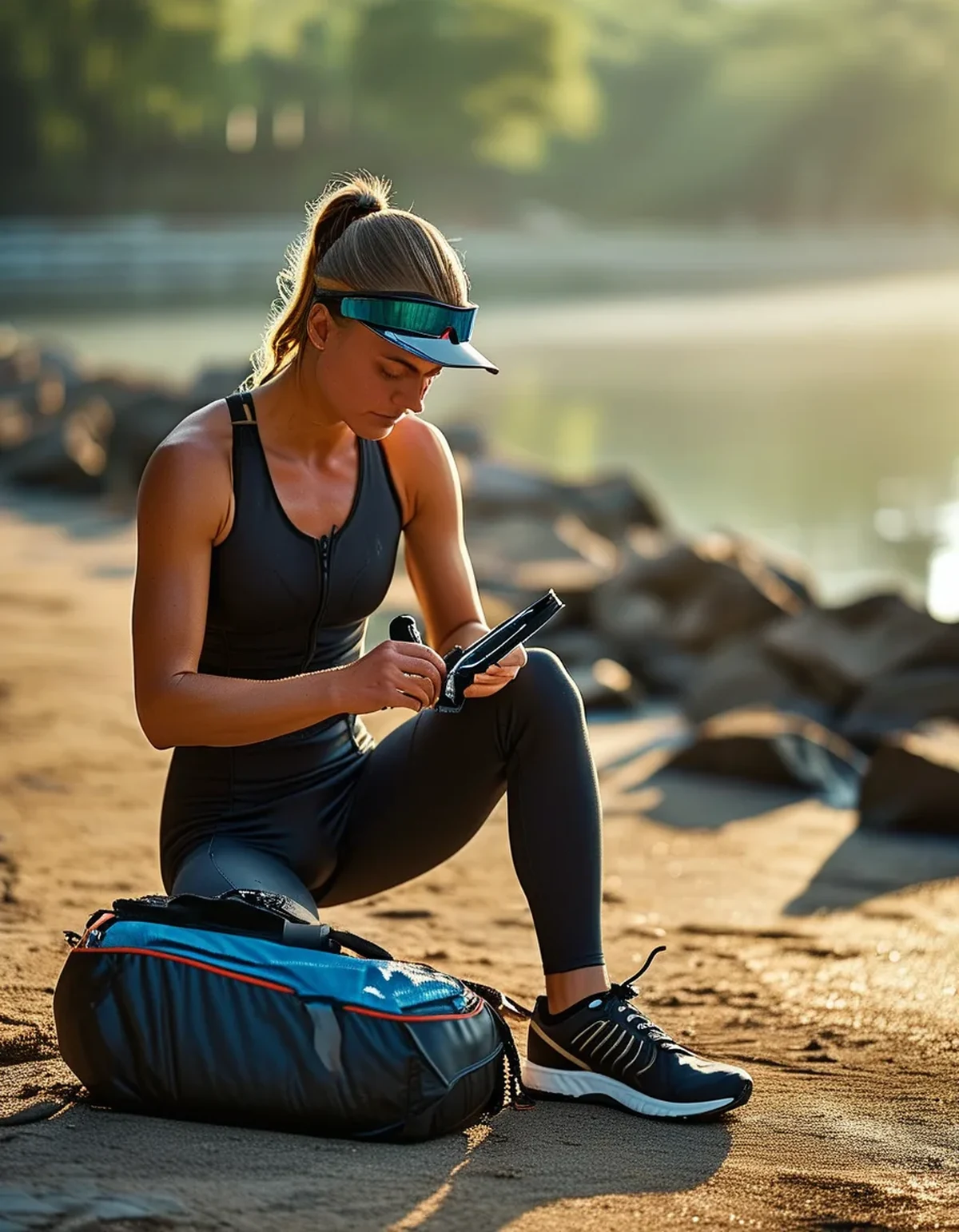
You’ve done the training. Then race morning, you’re elbow-deep in a bag looking for your bike shoes while precious transition seconds tick by. That’s not a fitness problem, it’s a packing order problem.
Why does packing order matter more than what’s in the bag?
Most triathletes pack everything they need and stop there, without thinking about the sequence they’ll actually reach for it. In transition, you’re moving fast and often a little disoriented from the swim, so any extra searching adds real time and stress that compounds under race pressure.
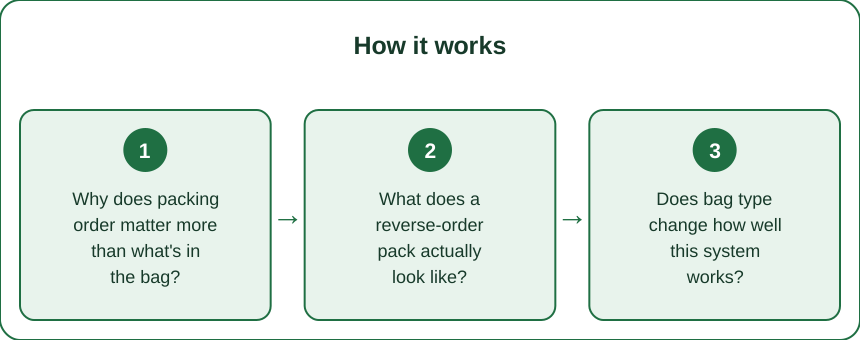
Packing in reverse-use order means the first item your hand touches is exactly what you need next, every time — no sorting through bike gear to find your run visor.
What does a reverse-order pack actually look like?
Start with run shoes and race belt at the bottom since you need them last. Layer bike shoes, helmet, and sunglasses in the middle for T1-to-T2. Put swim-to-bike items — cap, goggles, wetsuit lube on top, since those are the first things you’ll grab coming out of the water.
A small mesh bag or separate ziplock for nutrition (gels, chews) clipped to the outside, rather than buried inside, also saves fumbling mid-transition.
Does bag type change how well this system works?
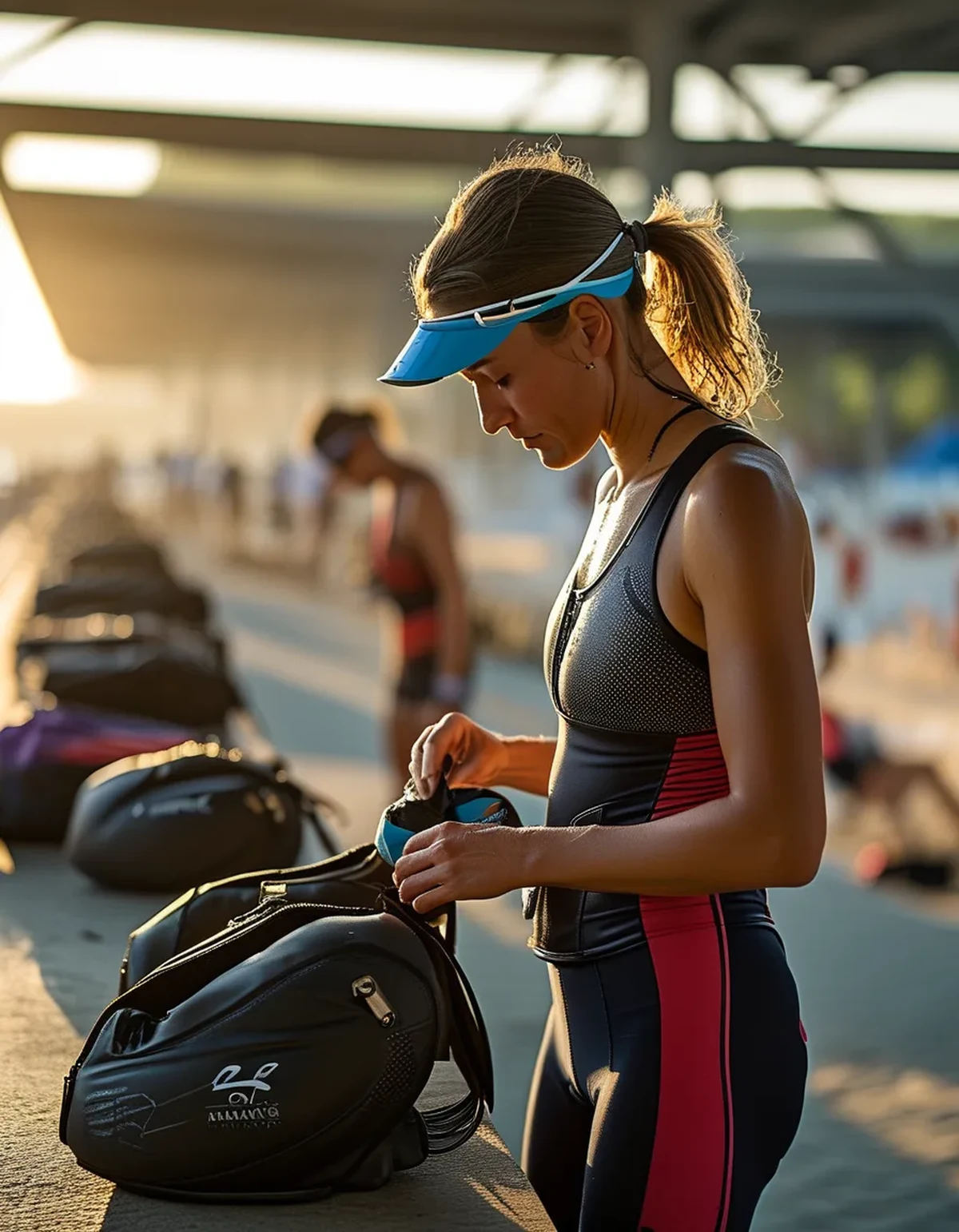
A clear or open-top bag works better than a drawstring one, since you can see contents at a glance even with the reverse-pack system. Transition-specific bags with a built-in mat and side pockets are worth it if you race often — the mat keeps gear off wet grass or asphalt and doubles as a visual anchor to find your spot.
5 Mistakes That Slow Down Transition
Packing gear randomly and relying on memory. Race-morning adrenaline makes memory less reliable than a system.
Not doing a practice transition at home with the actual bag. A dry run reveals packing problems before race day.
Burying nutrition at the bottom of the bag. You need it accessible, not excavated.
Skipping a visual landmark for your transition spot. A bright towel or balloon saves real seconds in a crowded rack.
Not accounting for wet hands fumbling small zippers. Larger zipper pulls or open-top bags forgive shaky, cold, wet fingers.
Is this worth the extra prep time the night before?
Yes — the reverse-pack system takes maybe five extra minutes the night before compared to just tossing gear in, but it can save 30-60 seconds in transition, which is meaningful in age-group racing where placements are often decided by minutes, not just training. It also reduces the mental noise of searching, which matters for staying calm mid-race.
FAQ: Triathlon Transition Bag Questions, Answered
Should I use one bag or separate bags for swim, bike, and run gear?
One bag packed in reverse order works for most sprint and Olympic-distance races; separate labeled bags make more sense for longer races with bigger gear needs, like a half or full Ironman.
How early should I set up my transition spot on race morning?
Arriving with enough buffer to set up unhurried and still do a short warm-up is ideal — rushed transition setup often leads to the same disorganization the packing system is trying to prevent.
Does this system change for a wetsuit-legal vs non-wetsuit race?
Slightly — wetsuit strippers or a wetsuit-specific lube goes at the very top either way, since that’s always the first thing needed exiting the water.
TL;DR:
- Pack your transition bag in reverse order of use — last-needed item goes in first
- Run shoes at the bottom, bike gear in the middle, swim-exit items on top
- A clear or open-top bag beats a drawstring one for visibility under pressure
- A quick at-home practice transition catches packing problems before race day
Transition time is free speed — no extra fitness required, just a bag packed in the order your race actually happens.
Keep Reading
This article is for general informational and styling purposes only. Fit, sizing, and product availability may vary.