Triathlon Swim Training for Beginners: Conquer the Leg That Scares You Most
For most first-time triathletes, the swim is the scariest leg — but it is also the most trainable with the right approach. Building your swim from the pool to open water, step by step, turns dread into confidence. Here is why the swim intimidates beginners, how to train for it, and how to handle open water and race day.

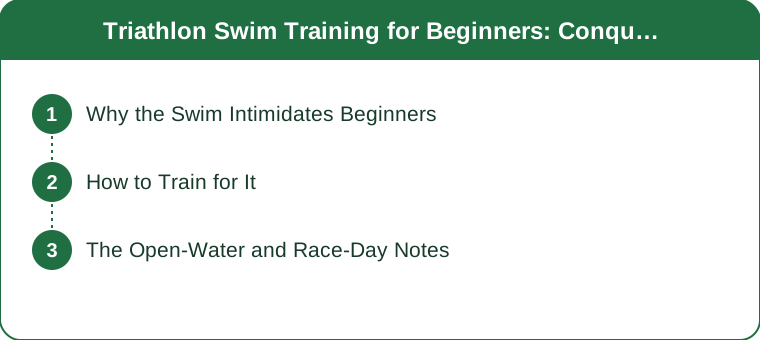
Why the Swim Intimidates Beginners
The fear behind the first leg: the the-open-water-unknown (the open water lacking the walls, lines and calm of a pool from the open-water logic — the the-open-water-factor), the the-crowded-start (the the mass start with other swimmers feeling chaotic from the race-survival logic — the the-crowd-nerves), the the-breathing-under-pressure (the controlling breathing when nervous being the real challenge from the swim logic — the the-breath-control), the the-least-familiar-leg (the swimming often being the least practiced of the three from the training-plan logic — the the-unfamiliar-skill), the the-fear-is-normal (the swim nerves being extremely common and beatable — the you-are-not-alone), and the reframe (the triathlon swim as the most trainable leg despite the fear — built from pool to open water with preparation).

How to Train for It
Building the swim: the the-technique-first (the efficient freestyle technique and breathing before distance from the swim logic — the technique-before-distance), the the-breathing-practice (the calm, rhythmic bilateral or comfortable-side breathing from the breathing logic — the the-breath-work), the the-build-continuous-distance (the extending how far you can swim steadily toward the race distance from the training-plan logic — the build-the-distance), the the-interval-sets (the swim intervals building fitness and pace from the training-plan logic — the the-sets), the the-pool-first-then-open-water (the mastering the pool before practicing open water from the open-water logic — the pool-then-open), the the-practice-sighting (the lifting the eyes to sight in open water from the open-water logic — the the-sighting-skill), the the-consistency (the regular swim sessions for steady progress — the show-up-often), and the the-wetsuit-practice (the training in your wetsuit if you will race in one from the gear logic — the practice-the-gear).
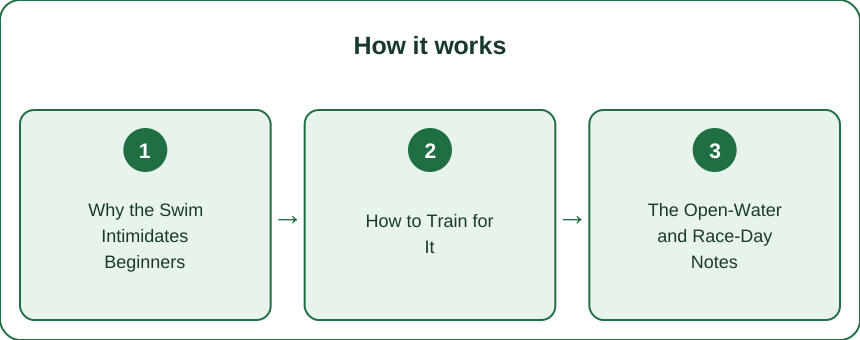
The Open-Water and Race-Day Notes
Handling the real thing: the the-practice-open-water (the training in open water before race day to remove the shock from the open-water logic — the no-surprises), the the-calm-the-start (the starting at the side or back and settling your breathing in the crowd from the race-survival logic — the ease-into-the-start), the the-sight-regularly (the sighting to swim straight without wasting energy from the open-water logic — the swim-straight), the the-pace-yourself (the a controlled, sustainable pace over a frantic start — the steady-pace), the the-breathing-stays-key (the keeping breathing calm and rhythmic throughout from the breathing logic — the breathe-calm), the the-practice-transitions (the practicing the swim-to-bike transition from the transition logic — the smooth-transitions), the the-it-is-okay-to-adjust (the flipping to backstroke or slowing if needed — the adjust-as-needed), and the frame (the triathlon swim as a trainable leg built through technique, breathing and open-water practice, handled with a calm start and steady pace — dread turned to confidence. Build technique and breathing first, extend your distance, practice open water and sighting, and start calm and steady on race day).
For most first-time triathletes, the swim is the scariest leg — but it is also the most trainable with the right approach. It intimidates beginners because open water lacks a pool’s walls and lines, the crowded start feels chaotic, controlling breathing under nerves is hard, and swimming is often the least-practiced leg. Train for it by building efficient freestyle technique and calm breathing before distance, extending your continuous distance toward race length, adding interval sets, mastering the pool before open water, practicing sighting, staying consistent, and training in your wetsuit. On race day, practice open water beforehand, start at the side or back and settle your breathing, sight regularly to swim straight, pace yourself, keep breathing calm, practice transitions, and adjust (backstroke, slow down) if needed. Dread turned to confidence.
Keep Reading
This article is for general informational and styling purposes only. Fit, sizing, and product availability may vary.