The Wetsuit Neck Chafing Problem That Ruins the First Ten Minutes of Every Triathlon
Quick Answer: Wetsuit neck chafing happens when the neoprene collar rubs against skin with every head turn during freestyle stroke, and it’s prevented almost entirely by applying a thin layer of anti-chafe balm (like BodyGlide) around the full neck collar before putting the suit on, not just at the front.
You come out of the water thrilled about your swim split and then spend the bike leg distracted by a burning line around your neck. It’s one of the most common and most preventable triathlon annoyances, and most first-timers only learn the fix after their first bad chafe.

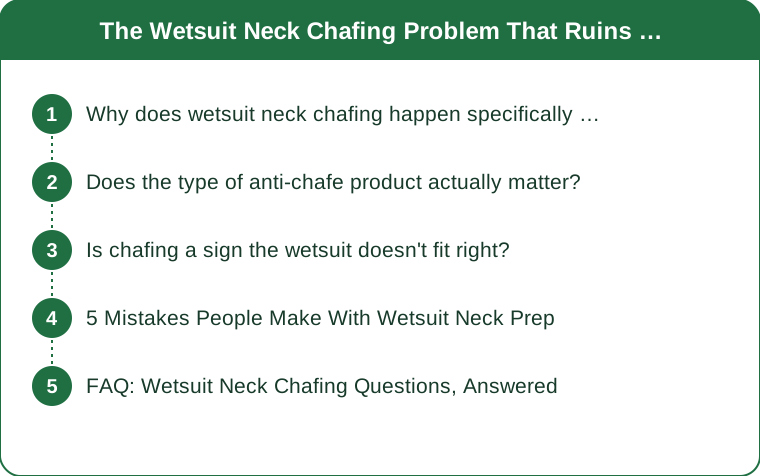
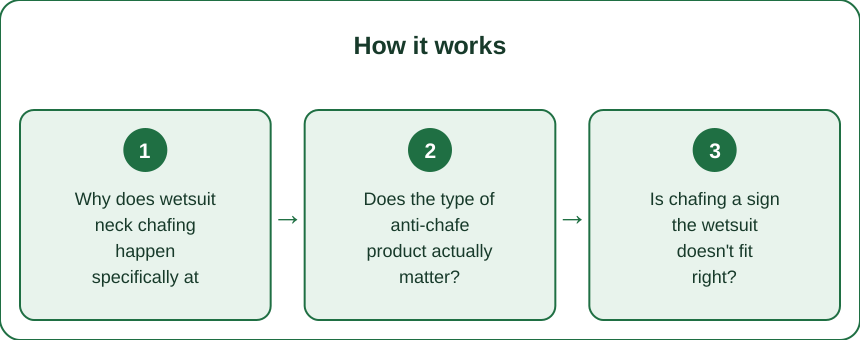
Why does wetsuit neck chafing happen specifically at the neck and not elsewhere?
The neck collar has to seal tightly enough to keep water out, which means it’s under constant tension and rubs with every stroke-driven head turn — unlike the arms or torso, which move with less repetitive friction against the suit, the neck collar experiences hundreds of small rubs per swim, and that repetition is what turns mild friction into a raw chafe line.
Does the type of anti-chafe product actually matter?
Yes — silicone or wax-based balms (like BodyGlide) work significantly better than petroleum-based products for wetsuit use, because petroleum jelly can actually degrade neoprene over repeated use, while silicone-based balms are specifically formulated to be wetsuit-safe and create a slicker barrier that survives longer in water.

Is chafing a sign the wetsuit doesn’t fit right?
Sometimes — a collar that’s too loose moves around more and creates more friction, while one that’s too tight increases pressure at the rub point, so if balm alone isn’t solving it, it’s worth checking whether the suit’s neck size actually matches your neck circumference rather than just your overall body size, since these don’t always scale together.
5 Mistakes People Make With Wetsuit Neck Prep
- Applying balm only at the front of the neck instead of the full collar circumference. 2) Using a petroleum-based product that degrades the neoprene seal over time. 3) Skipping balm entirely on a ‘quick’ practice swim, then chafing badly on race day because it’s a new sensation under adrenaline. 4) Not testing collar fit in an actual open-water swim before race day, where head-turning patterns differ from pool swimming. 5) Removing the wetsuit forcefully at the neck during transition, which can re-irritate skin that’s already sensitized from the swim.
FAQ: Wetsuit Neck Chafing Questions, Answered
How much balm is actually needed around the neck?
A thin, even layer around the entire collar — a thick glob doesn’t add protection and can actually reduce the wetsuit’s seal, letting in more water than a properly thin application.
Can chafing happen even with balm if the swim is long enough?
Yes, on swims over 45-60 minutes some reapplication-resistant balms can wear thin — for full-distance triathlons, choosing a longer-lasting balm formulated for endurance use is worth the small cost difference.
Should I treat a chafe mark once it’s happened, mid-race?
A quick rinse with clean water and, if available, a bit more balm before the bike leg reduces further irritation from helmet straps or wind, though full treatment should wait until after the race.
TL;DR:
- Neck chafing comes from repeated collar friction during every stroke-driven head turn
- Silicone or wax-based balm applied around the full collar prevents most chafing
- Petroleum-based products can degrade neoprene — avoid them on wetsuits specifically
- Test collar fit and balm routine in an actual open-water practice swim, not just the pool A thirty-second prep step before you even get in the water is the difference between a triathlon you remember for your swim split and one you remember for a stinging neck on the bike leg.
Keep Reading
This article is for general informational and styling purposes only. Fit, sizing, and product availability may vary.